IRANIAN PISTACHIO:
Pistachio trees originated in the Middle East, Persia (Iran), Syria, Turkey, and Greece, where arid regions and desert temperatures are prevalent. Pistachio trees have been farmed for almost 3,000 years. Persian high desert locations with plenty of sunshine are suitable for cultivating pistachios. Some deserts in southern Iran, such as those in Kerman province, cover hundreds of thousands of hectares and have ideal soil for growing pistachios. Pistachio trees planted in orchards need from seven to 10 years to achieve maturity.
Pistachios are known as "Green Gold" among Iranians and are regarded as an essential product in terms of nutrition and economics. Pistachios have a unique place in the hearts of every Iranian. Pistachios may be found in every Iranian household since they have become a part of Iranian culture by bringing families together and are considered as a delicacy being presented to a guest who may simply drop in for a chat and a cup of tea.
As the Toppnuts company expands and produces Iranian pistachios, we are able to deliver various types of pistachios and kernels based on your requests and standards.
Long Type
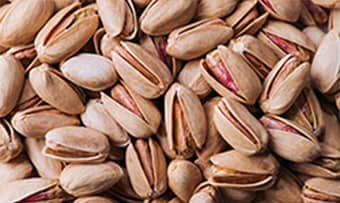
Akbari is a long form of Iranian pistachio that is also the most expensive and rare among all Iranian pistachios. One of the qualities that distinguish this kind from other Iranian pistachios is its head height, which is equal to its length. Akbari pistachios come in several sizes: 20-22, 22-24, 24-26, and 26-28.
Ahmad Aghaei (AA) is another sort of long Iranian pistachio, with a lengthy form but varying lengths. This sort of Iranian pistachio is the most popular in eastern Asia, particularly in China and India. AA pistachios come in a variety of sizes: 20-22, 22-24, 24-26, 26-28, 28-30, and 30-32.
Badami is another type of long Iranian pistachio, shorter than Ahmadaghaei and with a kernel that is quite similar to almond. Badami pistachios are available in the following sizes: 22-24, 24-26, 26-28, 28-30, and 30-32.
Fandoghi (Round)
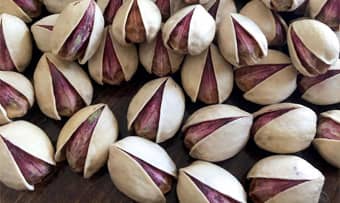
This form of pistachio has a spherical shape, and unlike long pistachios, its length is shorter and smaller than other types of pistachios. Fandoghi pistachios are the most popular sort for export since they are reasonably priced. Fandoghi pistachios come in the following sizes: 22-24, 24-26, 26-28, 28-30, 30-32, and 32-34.
This pistachio is one of Iran's traditional export items. Round pistachios have a high protein content and nutritional value. Pistachios have long been Iran's primary non-oil export product.
Kallehghouchi (Jumbo)
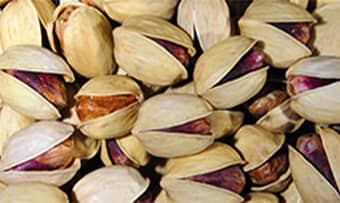
Jumbo pistachios are bigger and longer than round pistachios. Kallehgouchi pistachio has a long history of agriculture, dating back over 4000 years. Jumbo pistachios come in the following sizes: 18-20, 20-22, 22-24, 24-26, and 28-30.
The current distinctive great situation of Iranian Jumbo pistachio is the product of Iranian farmers' and growers' exceptional competence. Existing data shows that Iran accounts for more than 70% of global Jumbo pistachio output, with certain years reaching a high yearly production of 300,000 m/t.
Closed shell pistachio Kernels
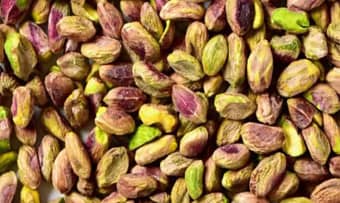
Closed shell pistachio are brought to the pistachio Cracking Factory, where they will be cracked and turned into kernels. This entire process is automated. This variety is somewhat lighter in color than open shell pistachio kernels, but it costs less and is more reasonable. This variety of Iranian pistachio kernel works well in baked goods or culinary applications, where it needs to be ground into a powder or blended.
Open shell pistachio kernels
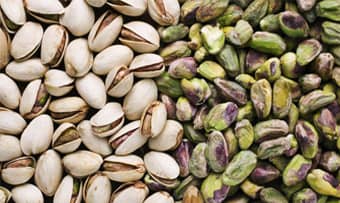
The hue and size of open shell pistachio kernels are abundant. Because these Iranian pistachio kernels are extracted from open shell pistachios that must be manually cracked, the process is more labor-intensive and costs more than closed shell kernels. This variety is especially appropriate for confections, such as Baklava or Turkish sweets, when the pistachios will be utilized raw without being blended or ground into a powder.
Raw Kernels
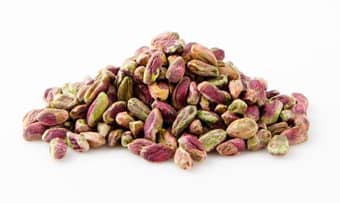
Raw kernels are harvested from trees while the pistachios are still raw and have not achieved the typical level of maturity; this explains why they are green. Typically, this variety of Iranian pistachio kernels is harvested between July and August. This variety can be rated based on the proportion of raw color that is distinguished as green; if it is entirely raw with a low proportion of red kernels, good quality is approved.
Green Peeled kernel
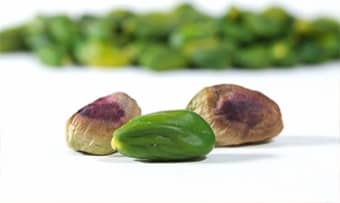
Peeled green kernelsAmong all the kernel varieties, green peeled kernels are regarded as the most expensive and premium. Raw or Kaal kernels are the source of green peeled kernels. Green-peeled kernels can be divided into four categories based on how much green color they contain: dark green, green, greenish, yellow, and light yellow.
Closed shell pistachio
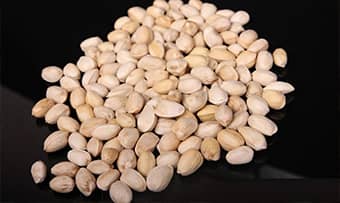
Iranian pistachio variety in question is inherently closed and has not yet opened. Pistachios undergo a mechanical process known as shelling, which turns them into natural kernels. Pistachios come in a variety of closed shell types, with 48–50% of them having kernels.
About 15,000 tons of closed-shell pistachios are exported from Iran to various countries worldwide. The Far East, which includes nations like China, Taiwan, Hong Kong, Malaysia, Indonesia, and others, is the primary market for this variety of pistachio.