IRANIAN FIGS:
Another member of the family of dried fruits and nuts, the dried fig was first domesticated in western Asia and then spread throughout the Mediterranean. As per Harley's report from 1985, the original source of figs is a tree known as "Ficus Carica," which requires a dry and hot climate to thrive and attain maturity. This dried fruit has a lengthy history because it is mentioned in the Quran, the Bible, and the Torah. It is also stated that, in the prehistoric era before the invention of fabric, Adam and Eve covered their bodies with fig leaves.
Turkey, the United States, and Iran are the top three fig producers in the world, together producing 1,077,21 metric tons of figs a year . Iranian baby figs, often referred to as small or baby figs, are distinguished primarily by their dry, rough, and wrinkled texture. After planting,fig trees typically achieve their mature production level four years later and continue to develop for another twenty to twenty-five years. Chinese, Russian, Indian, and Hong Kong importers are the primary markets for Iranian dried figs. Iranian figs fall into five categories:
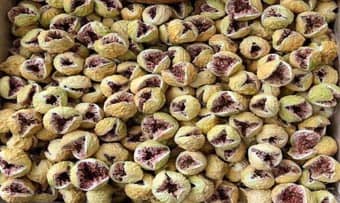
101 AA :
Of all the Iranian dried fig varieties, this one is the most unique and costly. This type's primary feature is its white or slightly yellow hue. This kind is large and easy to eat and chew because most of the figs in it have open mouths. Each fig in this type shall have a minimum size of 22 mm, and close mouth figs cannot have a maximum size of 10%.
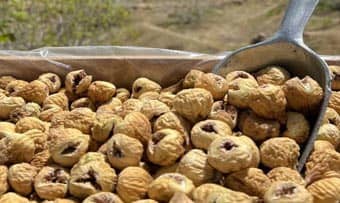
101 A :
This variety of dried figs from Iran is also of the open mouth variety. In comparison to 101AA, this type is more affordable and smaller. The size and percentage of open mouth are what set this kind apart from 101AA, despite both having comparable qualities. This variety is likewise white and yellow, but each fig is between 14 and 22 mm in diameter and has 15% of its mouth closed.
AA :
Because it is half opened, large, and has reasonable rates, this is the best variety for export. This variety is under the closed mouth category, although in reality, it is more accurately described as half-open figs. This kind's size is 22 mm, or 101AA, but what makes it different is that the figs in this type have a partially open mouth. Either white or yellow should be the color.
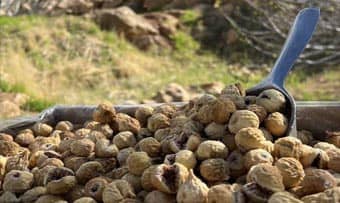
A :
This variety of dried fig differs from other varieties in a few ways. Firstly, most of the figs in this type have closed mouths, and they should be either white or yellow in color, though some brown figs are also acceptable. figs range in size from 14 to 22 mm. There may also be some open-mouth figs of this kind.
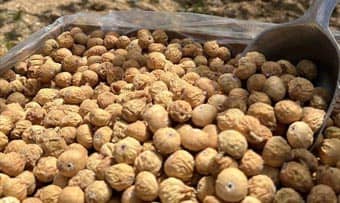
B :
Among dried figs from Iran, these are the least expensive and of the lowest quality. Because figs are small—about 14 mm in diameter—and have brown and gray coloration. This variety of dried figs is appropriate for marketplaces and price-sensitive consumers who are merely considering the cost.